Can AI-Generated Content Compete in Search Rankings? Discover the Research-Backed Insights
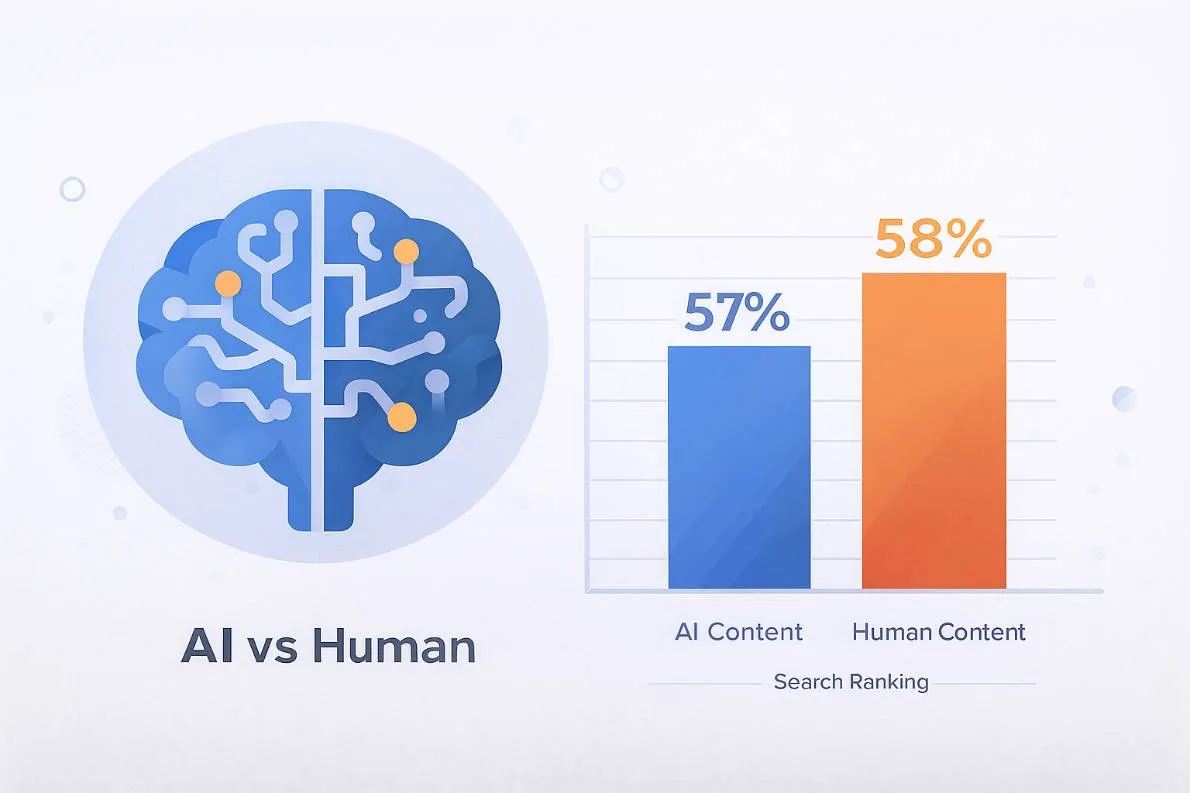
If you’ve been wondering “will AI-generated content rank?”, you’re not alone. The short answer is yes—AI content can rank in Google when it meets quality, originality, and value criteria. In a sample of 20,000 URLs ranking in the top 20, AI content performed almost as well as human-written content: 57% of AI text and 58% of human text appeared in the top 10. Marketers are seeing results too: 39% noticed increased organic traffic after publishing AI content, and 33% said it outperformed human-written pieces. How you create and optimise it is crucial. Blending AI and human input works best, with 73% of marketers already doing exactly that.
This guide addresses the core question—will AI-generated content rank?—and provides a research-backed roadmap to ensure it does. You’ll discover what Google actually prioritises, the key ranking factors for AI-assisted content, and the workflows, and technical details that keep you ahead of algorithm updates. Throughout, we’ll emphasise E-E-A-T (Experience, Expertise, Authoritativeness, Trustworthiness), because it’s essential—especially for YMYL (Your Money Your Life) topics. We’ll show how a balanced approach, like the one we use at Rankforge AI, helps you publish AI content that earns trust and traffic.
Understanding AI-Generated Content and Search Rankings
Let’s get straight to it: will AI-generated content rank in competitive results? It can, provided it meets the same standards as any top-performing page—insightful, well-researched, and genuinely valuable. Google claims it doesn’t penalise AI-written content; it cares about the outcome for users. When your content demonstrates E-E-A-T and aligns with search intent, it can compete.
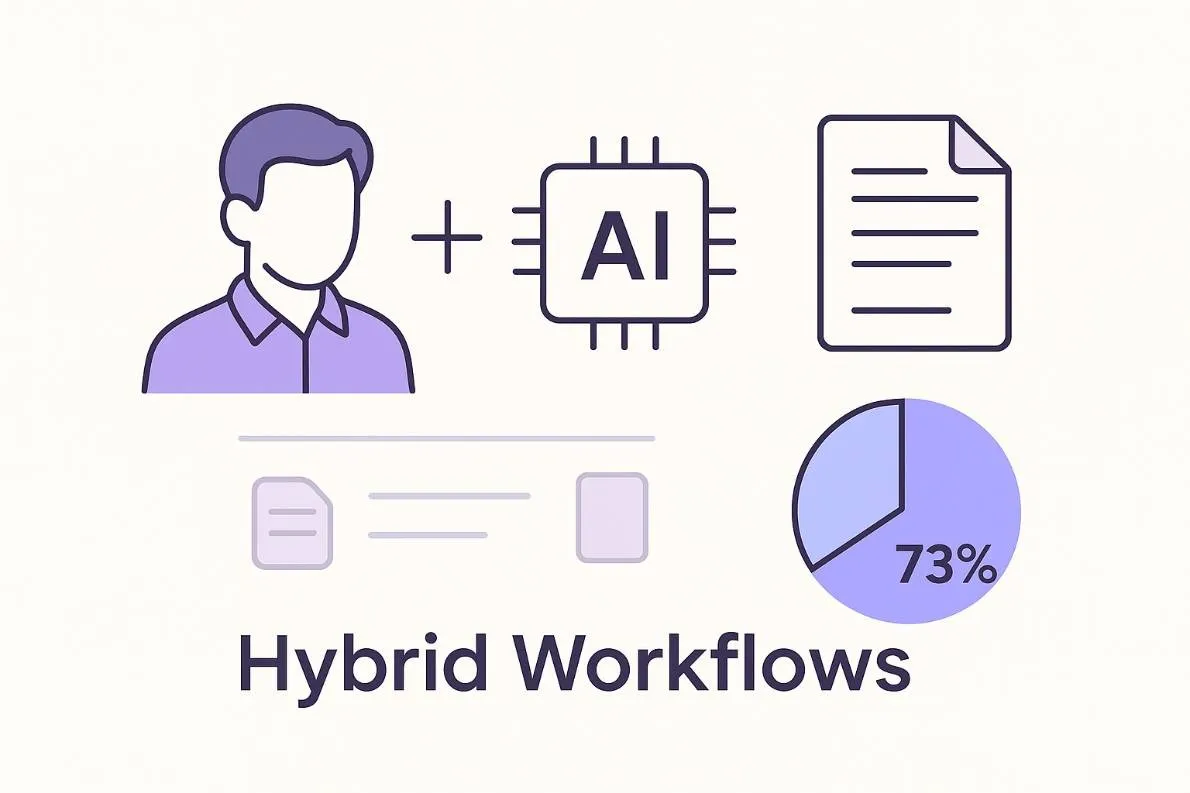
Real-world data backs this up. In a large sample, AI content ranked almost on par with human-written content in the top 10. Marketers report tangible benefits too: 39% saw increased organic traffic after publishing AI content, and a third say it sometimes performs better than human-only content. However, the best results come from a hybrid workflow. Most marketers (73%) blend AI and human writing, and many refine AI drafts with human editing (69%), build on initial AI outputs (48%), and add original research (55%). That combination is the key formula for success.
So, will AI-generated content rank if you hit publish on unedited drafts? That’s where results tend to fall short. Common mistakes include neglecting human oversight and failing to optimise AI-produced drafts. A simple, effective process is to draft with AI, then refine with expert editing to ensure accuracy, clarity, and alignment with E-E-A-T.
Key Factors for Ranking AI-Generated Content
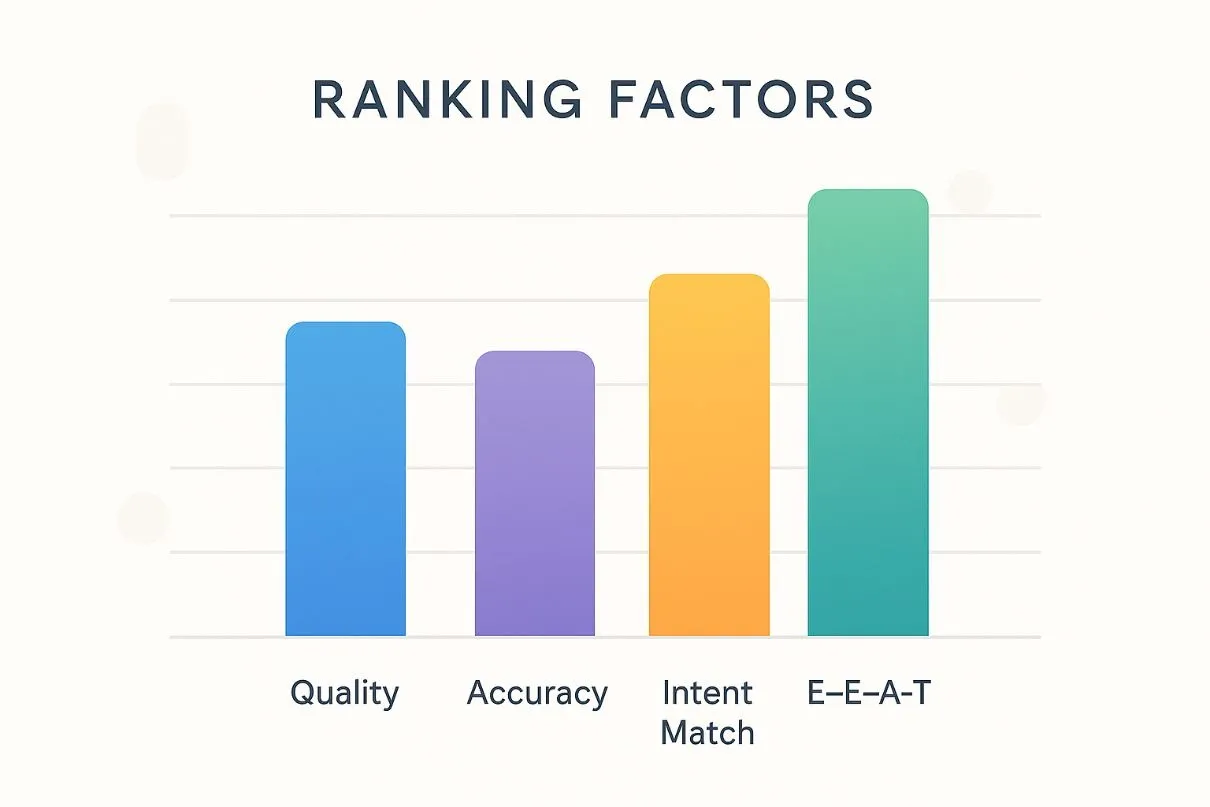
You want confidence that your investment in content will pay off, and you want a clear answer: will AI-generated content rank if you follow best practice? Focus on these fundamentals:
- Depth and quality
Google’s algorithms prioritise content that is insightful, well-researched, and truly useful. Aim for comprehensive coverage rather than surface-level takes. This remains true whether the first draft comes from a human, an AI model, or a mix.
- Accuracy and freshness
Accurate and updated content matters, especially in fast-moving fields. If your topic evolves quickly, commit to updating pages so they stay current. This protects trust and reinforces E-E-A-T.
- Relevance and intent
Ranking hinges on matching search intent. The more precisely your content answers the question behind the query, the better. Align structure, examples, and language to the user’s goal.
- E-E-A-T, particularly for YMYL
Experience, expertise, authoritativeness, and trustworthiness are crucial—especially for Your Money Your Life topics. If your content impacts finances, health, or safety, elevate credibility signals and ensure expert oversight.
With those pillars in place, you stack the odds in your favour. And remember: SEO remains valuable for 99% of marketers, but the approach matters. Adaptation and refinement separate the winners from the rest.
Strategies to Enhance AI Content Ranking
Will AI-generated content rank if you optimise the process behind it? Yes—especially when you follow a practical, research-backed workflow that teams AI with human judgement.
A proven step-by-step approach:
1. Conduct thorough keyword research
Identify relevant keywords with solid search volume and manageable competition. Choosing the right topics and terms sets up everything else.
2. Draft with AI to accelerate production
Use AI tools to generate a structured, on-topic draft quickly. This saves time without sacrificing the chance to reach depth and quality later.
3. Apply human oversight for accuracy and clarity
Edit the draft for correctness, nuance, and precision. Your editorial pass refines tone, sharpens arguments, and removes repetition or fluff—steps critical for E-E-A-T.
4. Optimise structure for readability and engagement
Use clear headings, bullet points, and short paragraphs. Incorporate engaging visuals where relevant to support comprehension. These formatting choices improve user engagement and help reduce bounce rates.
5. Publish, then monitor performance
Go live and watch the data. Make iterative updates based on what you learn from real user behaviour.
Why this works:
- It’s aligned with how top marketers operate. Most blend AI and human writing (73%), then refine AI drafts (69%) and enhance with original research (55%).
- It ensures quality and depth, which directly influences rankings.
- It keeps you focused on the outcome: content that matches intent and delivers value.
Common mistakes to avoid:
- Publishing AI drafts without editing
This risks inaccuracies and unclear messaging, both of which can suppress rankings.
- Skipping strategic keyword research
Targeting keywords with high competition or weak relevance undercuts your chances of ranking from the outset.
- Overlooking structure and formatting
Even strong ideas get ignored if readers find them hard to scan or understand.
Technical and Structural Enhancements
A key part of the answer to “will AI-generated content rank?” lies in how you support your pages with the right technical signals. These enhancements help search engines understand and trust your content—and help users do the same.
- Implement schema markup to highlight authorship and enhance E-E-A-T
Schema markup is structured data that clarifies context for search engines. By implementing schema, you can specify information about authors and strengthen perceived E-E-A-T. This can improve visibility and click-through rates.
- Ensure your site uses HTTPS
HTTPS secures data transfer and is a ranking signal. It also improves user trust, which can reduce bounce rates.
- Use internal linking strategically
Link to relevant content within your site to improve navigation and distribute authority. Descriptive anchor text gives context to users and search engines, supporting discoverability and ranking.
Common technical pitfalls to avoid:
- Skipping schema markup
You lose potential enhancements in search visibility.
- Neglecting HTTPS
You risk lower trust and diminished rankings.
- Overlooking internal links
You hinder crawling and dilute page authority.
Helpful implementation steps:
- For schema: Identify the content you want to mark up, choose the appropriate type from Schema.org, implement the markup, then test it using Google’s Structured Data Testing Tool.
Monitoring and Adapting to Algorithm Changes
Search algorithms evolve continuously, so your approach must evolve too. If you’re asking “will AI-generated content rank next quarter like it did last quarter?”, the honest answer is: it depends on how well you adapt.
A simple, repeatable monitoring process:
1. Review analytics at regular intervals (weekly or monthly)
2. Define and track KPIs that matter to you
3. Analyse changes in traffic, rankings, and engagement
4. Research recent algorithm updates and likely impacts
5. Adjust your content strategy based on findings
6. Test new approaches and monitor their performance
7. Document changes and results to refine your playbook
This cycle works because it closes the loop between strategy and outcomes. Notably, 99% of marketers still find SEO valuable, underscoring the importance of disciplined iteration. Marketers who adjusted strategies after updates report increased organic traffic, showing the upside of staying proactive. Common mistakes include failing to update your approach after algorithm changes, not monitoring performance regularly, and missing new best practices.
The Role of AI and Human Collaboration
When you ask, “will AI-generated content rank?”, the most accurate response is: it will when AI and human strengths are combined. That’s not guesswork; it’s how the majority of successful marketers operate today.
- Blended workflows win
73% of marketers combine AI and human writing. This pairing accelerates production while preserving clarity, credibility, and connection.
- Human oversight is non-negotiable
Editors ensure accuracy and nuance, and they apply the E-E-A-T lens. They also enrich AI drafts with original research, a practice 55% of marketers use to strengthen content.
- AI excels at ideation and drafting
Use AI to kick-start outlines and first drafts, then rely on expert editing to add depth, evidence, and polish. Many marketers refine AI drafts (69%) and build upon initial outputs (48%) to reach the quality bar.
- Results justify the approach
39% of marketers saw organic traffic rise after publishing AI content, and 33% reported better performance than human-only content in some cases.
So, will AI-generated content rank if you produce it thoughtfully? The odds are firmly in your favour when you blend AI efficiency with human judgement, then back it with technical and analytical rigour. That’s the philosophy we apply at Rankforge AI—use AI to scale, and human expertise to succeed.
Bringing It All Together
If you still find yourself asking “will AI-generated content rank?”, here’s the bottom line:
- Yes, AI content can rank—and often does—when it’s insightful, accurate, and intent-matched.
- E-E-A-T is essential, especially for YMYL pages. Show real expertise and build trust.
- A hybrid workflow works best: draft with AI, then refine with human editing, original research, and clear structure.
- Support your content with technical best practices like schema, HTTPS, and internal linking.
- Monitor performance and adapt to algorithm changes—consistently.
You don’t need to gamble on whether your next piece will perform. Use a repeatable system, stay close to the data, and keep refining. That’s how you turn the question “will AI-generated content rank?” into a confident, evidence-backed yes.
FAQ
Q1. Does AI-generated content rank in Google?
Yes. In a sample of 20,000 URLs, AI content performed almost as well as human-written pages, with 57% of AI text and 58% of human text appearing in the top 10. The key is meeting quality, originality, and value criteria while aligning to E-E-A-T.
Q2. What is AI-generated content?
AI-generated content is text produced by artificial intelligence tools, often used for ideation and drafting. The best outcomes come when humans refine the draft for accuracy, clarity, and E-E-A-T before publishing.
Q3. How do I make sure my AI content meets E-E-A-T?
Blend AI with human oversight. Edit drafts to ensure accuracy and clarity, add original research, and clearly identify authorship to enhance expertise, authoritativeness, and trustworthiness.
Q4. What are the most common mistakes when publishing AI content?
Two stand out: publishing unedited AI drafts and skipping strategic keyword research. Both reduce relevance, clarity, and credibility—factors that directly impact rankings.
Q5. Which technical enhancements help AI content rank better?
Implement schema markup to identify authors and strengthen E-E-A-T, ensure your site uses HTTPS, and use internal linking with descriptive anchor text. These steps improve understanding, trust, and discoverability.
Q6. How should I adapt my AI content strategy after algorithm updates?
Review analytics regularly, track your core KPIs, and study recent updates for potential impacts. Adjust your strategy, test new approaches, and document results so you can refine your process over time.
Ready to boost your online visibility and ensure your AI-generated content ranks? Discover how Rankforge AI can help you create professional articles that attract visitors and enhance your search engine presence—visit us at rankforgeai.247-workforce.com to get started!