Why SEO for Real Estate is Your Key to Captivating Homebuyers Online
Introduction to Real Estate SEO
Real estate SEO enhances the online visibility of properties, agents, and agencies by attracting people through organic search rather than paid ads. In a market where 97% of homebuyers begin online, and 100% of recent buyers used the internet to find a home in 2024, you need to be where intent is highest: search results. Done well, SEO for real estate increases traffic and revenue, boosts brand awareness, strengthens brand protection, and creates dependable entry points into your sales funnel via website conversion points.
Think of SEO for real estate as an inbound engine. Instead of chasing attention, you earn targeted visibility at the exact moment someone searches for your listings, your area, or services like yours. This cost-effective approach generates motivated leads because most searchers don’t go past the first page.
Getting started is straightforward: focus on keyword research, quality content, and local optimisation. Campion & Company, a small Boston agency, used these fundamentals to outrank large property portals for high-value searches and now ranks for 19K+ terms—proof that a sharp, consistent strategy can win, even against giants. Avoid the pitfalls: neglecting user experience, skipping thorough keyword research, and ignoring local search. SEO is a sustainable strategy, so build a fast, user-friendly site with valuable information and clear conversion points—and stay the course.
Understanding Keywords for Real Estate
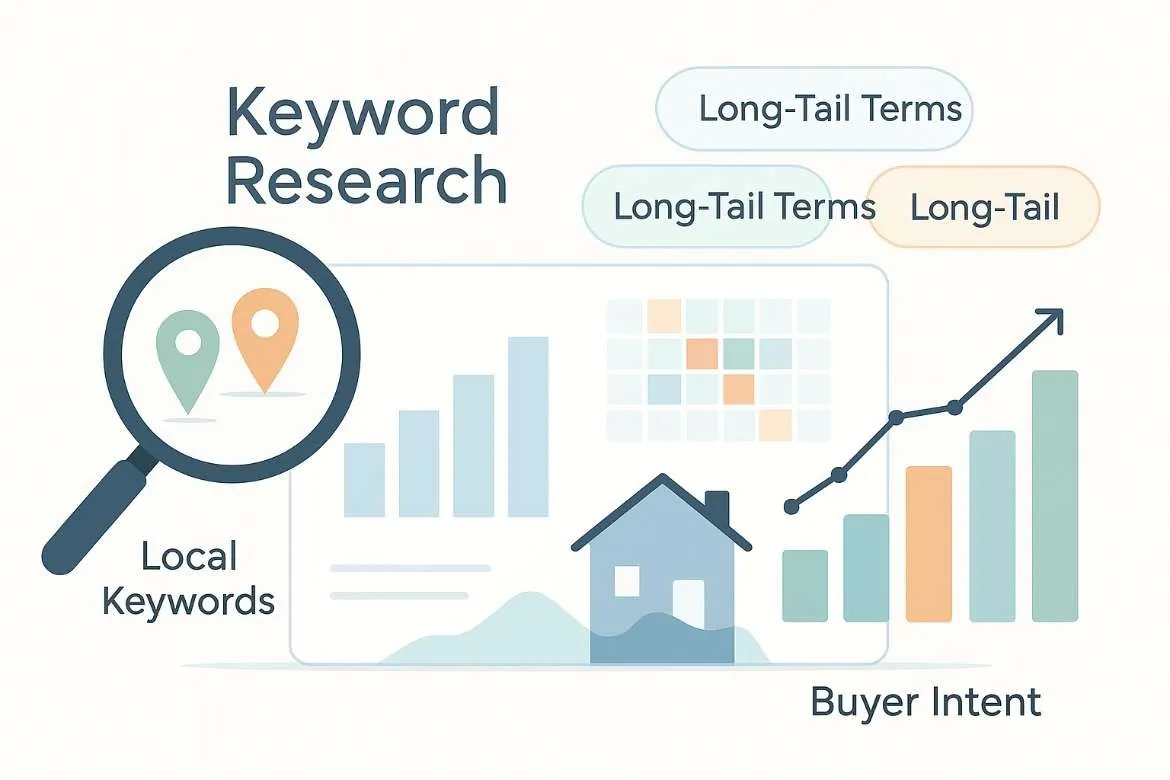
Keywords are the foundation of SEO for real estate. They tell search engines what each page is about and help you match the phrases buyers and sellers use.
- Do your keyword research: Identify the terms potential clients use when searching for housing, then determine which are reachable based on search volume and competition.
- Prioritise long-tail opportunities: Specific phrases (e.g., 'two-bed flat near [neighbourhood] park with parking') tend to have lower competition and higher intent. These long-tail keywords are easier to rank on property pages and can drive qualified leads.
- Focus on location-specific terms: Finding and incorporating the right location keywords is essential for local SEO success. Geo-targeted phrases ensure you’re visible to people actively looking for properties or agents in your area.
Mistakes include failing to conduct thorough research, overlooking location keywords, and targeting only broad, highly competitive phrases. Agencies that structure their website around long-tail and local terms consistently see better rankings and more qualified traffic. The lesson for SEO for real estate is simple: speak your audience’s language and align your pages to their exact intent.
Optimising Your Real Estate Website
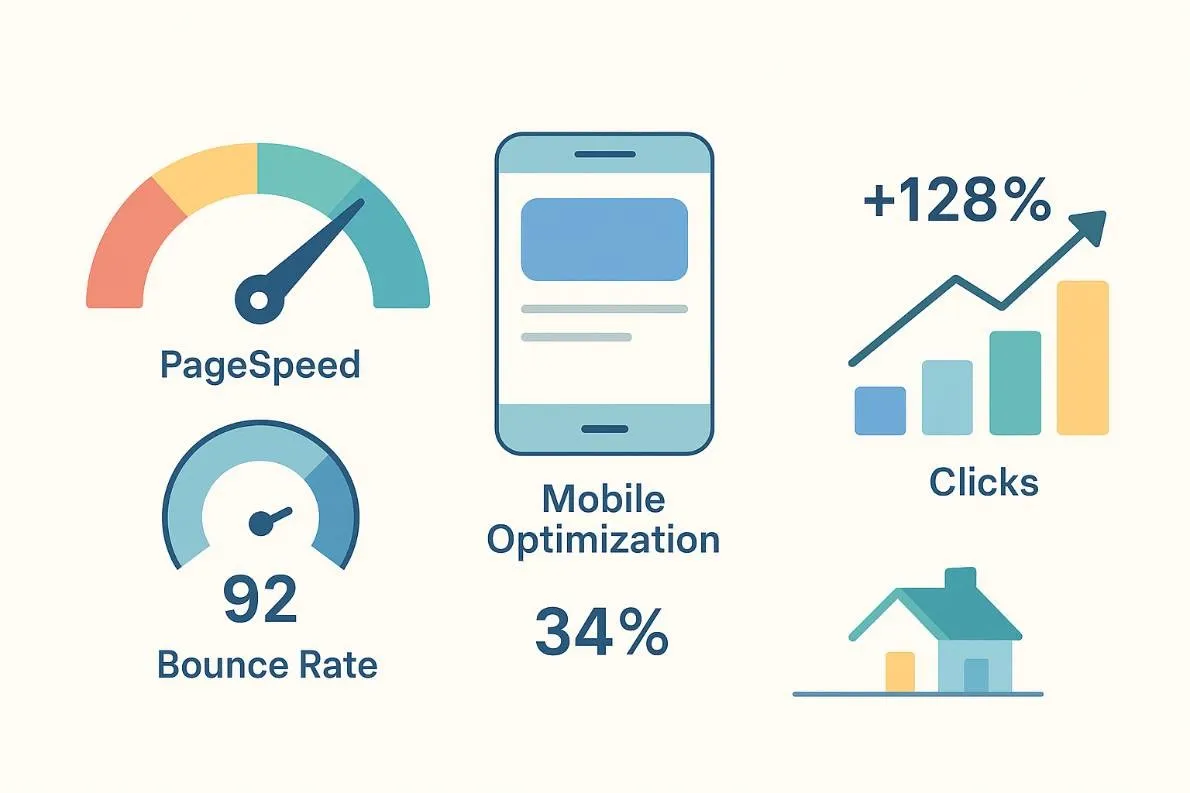
A strong technical and on-page foundation makes your content discoverable and clickable.
- Make sure Google can find your listings: Use Google Search Console to confirm your pages are indexed and fix any indexing issues.
- Optimise title tags and meta descriptions: These signal what your page is about and can dramatically improve click-through rates in search results.
- Use clear headings (H1, H2): Structure content so readers and search engines immediately understand your page’s focus.
- Optimise on-page elements: Naturally integrate target keywords so search engines can match your pages to relevant queries without keyword stuffing.
- Optimise for mobile: A mobile-optimised, fast, user-friendly site improves both rankings and conversions, which matters given how many buyers find their future home online.
Many teams focus solely on 'ranking' and forget the user. Search engines favour sites that load quickly, answer questions clearly, and make it easy to take action. In SEO for real estate, that means property pages that are easy to scan, photo-rich, fast, and designed with clear conversion points like enquiry forms and calls-to-action.
The Power of Local SEO for Real Estate
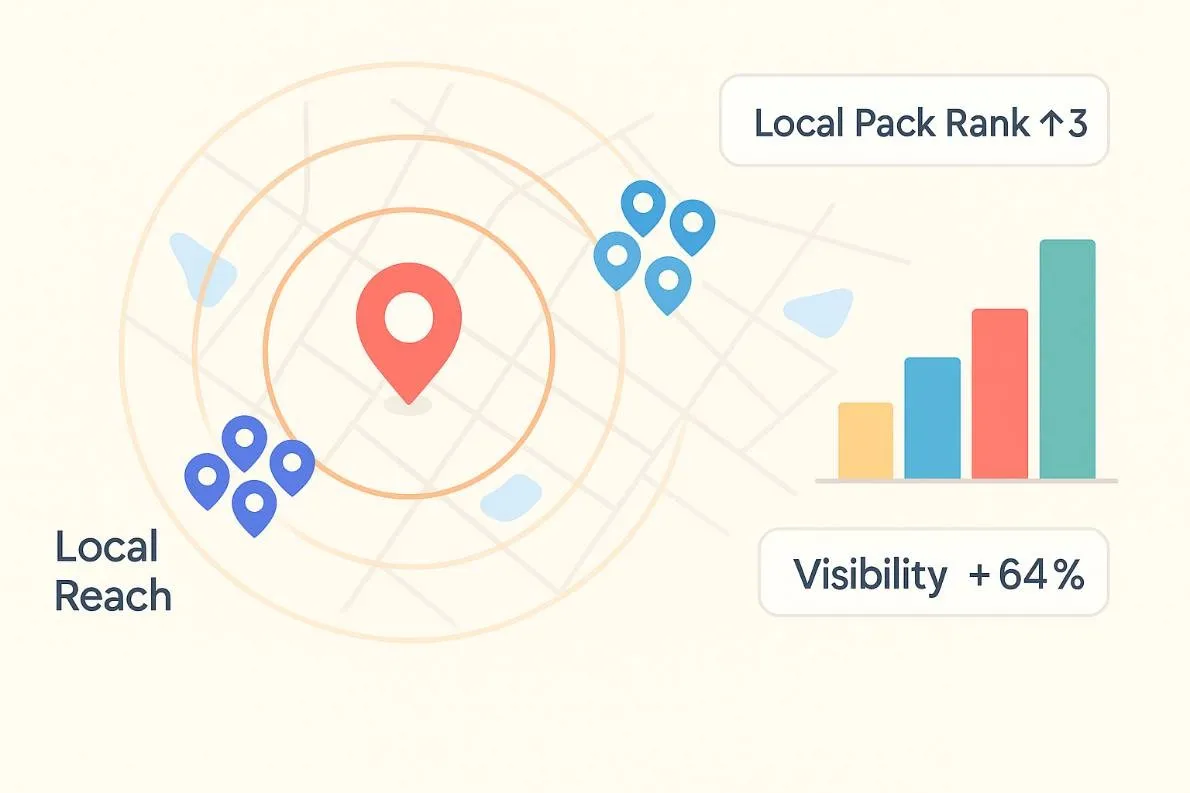
Local SEO makes you visible to people searching for properties or agents in your area and helps you appear in the local pack. It’s essential for attracting quality leads because most homebuyers start online—and many choose from what they see on that first results page.
Key local tactics include:
- Optimise your Google Business profile: This is crucial for ranking in local results and appearing on Google Maps for queries like 'realtor' or 'estate agent' near me.
- Create location-specific landing pages: Dedicated pages for each suburb, town, or neighbourhood you serve boost local relevance and generate targeted enquiries.
- Publish local content: Articles on property prices, neighbourhood trends, and buying/selling tips build credibility and attract organic traffic from residents researching your area.
Local SEO is a long-term strategy. Expect 3–6 months to see momentum, depending on competition, your website’s authority, and how consistently you optimise. Keep your local pages fresh and your Google Business profile up to date. In SEO for real estate, sustained, location-led relevance is what wins the map and local pack.
Essential SEO Elements
Several core elements underpin high-performing websites in SEO for real estate:
- Analyse your SEO competitors: See who ranks in your market and reverse-engineer what works. Campion & Company, for example, outranked large property portals for premium searches by executing these best practices consistently.
- Create useful, client-first content: Answer the questions buyers and sellers actually ask. Focus on local prices, neighbourhood insights, and clear 'how to' advice to attract organic traffic and keep people engaged.
- Increase traffic and conversions with relevance: Optimising pages for the right keywords improves visibility, clicks, and leads—especially important when online behaviour drives so many home purchases.
- Improve ROI with organic visibility: SEO is a cost-effective growth channel compared to paying for every click. In many markets, appearing directly under ads via organic results puts you in control of lead generation without the ad spend.
- Focus on impactful ranking factors: Backlinks, mobile-friendliness, and fast loading times are proven priorities. Search engines reward good user experience.
- Use multimedia to build rapport: Video and audio put a face to your service and help you connect with potential clients in a more human way.
- Build trust through local expertise: Detailed knowledge of neighbourhoods and communities differentiates you and is hard to replicate. Share specifics that demonstrate you live and breathe the local market.
Avoid neglecting local SEO and thin, generic content. In SEO for real estate, authority comes from depth, usefulness, and consistent alignment with what local buyers and sellers need.
Technical SEO Strategies
Technical excellence amplifies everything else you do in SEO for real estate:
- Google Business: Establish and optimise your profile to rank higher locally and get discovered by more prospects in Maps and search.
- Technical optimisation: Prioritise speed and responsiveness so visitors stay longer and convert more often. Fast sites perform better in search and sales.
- On-page optimisation with AI: An AI SEO Specialist can automatically update titles, meta descriptions, and headers each week, using real-time insights to align with what buyers search and what Google and AI engines prioritise.
- SEO blogs at scale: Publish fresh, local, SEO-optimised posts tailored to your market to stay relevant and build topical authority.
- Programmatic SEO: Generate thousands of keyword-optimised property pages automatically using your MLS data to expand your footprint and capture long-tail demand.
- Neighbourhood pages: Enhance your site with neighbourhood insights to establish expertise and improve visibility for local searches.
Don’t overlook structured data markup, site speed, and mobile optimisation. And remember: SEO can place your site directly beneath ads in the SERPs without paying per click—valuable in competitive markets. If you’re exploring AI-led implementation, Rankforge AI brings these capabilities together so you can keep pace with how buyers search and how AI surfaces content.
Real Estate SEO Checklist and Implementation
Use this 17-step checklist to plan and implement SEO for real estate that integrates naturally with your sales funnel:
1. Conduct thorough keyword research to identify high-intent terms.
2. Optimise your website’s structure for better user experience and navigation.
3. Create high-quality, informative content that addresses buyers’ and sellers’ needs.
4. Use local SEO strategies to improve rankings in geographic areas.
5. Optimise property listings with detailed descriptions and high-quality images.
6. Ensure your website is mobile-friendly and loads quickly.
7. Implement on-page SEO techniques, including meta tags and header optimisation.
8. Utilise your Google Business Profile to enhance local visibility.
9. Build backlinks from reputable sites to increase authority.
10. Regularly update your content to keep it fresh and relevant.
11. Monitor website analytics to track performance and make data-driven decisions.
12. Create neighbourhood pages to establish local expertise.
13. Use structured data markup to enhance search visibility.
14. Implement a blog to provide valuable insights and attract organic traffic.
15. Optimise for voice search by including natural language phrases.
16. Leverage social media to promote content and engage with potential clients.
17. Avoid mistakes such as keyword stuffing and neglecting mobile optimisation.
Each step feeds into lead generation by guiding visitors to conversion points—listing enquiries, valuation requests, and contact forms. The result is a seamless pathway from discovery to action that compounds over time.
The Future of Real Estate SEO with AI
Traditional tactics still matter, but AI is reshaping how search works and how people find homes. With 100% of recent buyers using the internet and 52% finding the home they purchased online, your presence needs to be optimised for both search engines and AI-influenced platforms.
What changes in SEO for real estate with AI?
- Optimise for AI-driven platforms: Improve site performance, maintain a complete Google Business profile, and use AI to keep on-page elements current with live market demand.
- Automate on-page improvements: AI can update titles, meta descriptions, and headers in real time to reflect buyer intent and algorithm shifts.
- Expand efficiently: Programmatic pages built from MLS data and tailored SEO blogs help you capture breadth without sacrificing relevance.
- Focus on intent-driven leads: Prioritise buyers and sellers ready to transact by targeting high-intent keywords and conversion-focused pages.
A small agency can still beat major players. Campion & Company demonstrates that consistent, locally authoritative SEO can outrank large portals and channel demand straight to your listings. Avoid the pitfalls—ignoring local SEO, overlooking user experience, and failing to leverage AI—and you’ll position your site for compounding growth. If you want an AI-enabled partner to help you execute, Rankforge AI integrates the technical, on-page, and content pieces required to stay visible as search evolves.
---
Ready to enhance your real estate visibility without breaking the bank? Discover how Rankforge AI can help you create optimised articles that attract local buyers and boost your online presence—visit us at rankforgeai.247-workforce.com to learn more!
FAQs
Q1. How can Rankforge AI improve my real estate website’s visibility on search engines?
By automating on-page optimisation (titles, meta descriptions, headers) each week using real-time insights, strengthening your Google Business profile, and generating keyword-optimised property and neighbourhood pages, Rankforge AI expands your search footprint. It also supports fast, mobile-friendly performance and fresh, local blogs to sustain relevance.
Q2. How long does it typically take to see results from Rankforge AI’s SEO strategies for my real estate website?
Local SEO is a long-term strategy, and results commonly take 3 to 6 months depending on competition, site authority, and the consistency of optimisation. As improvements accrue, visibility and lead volume build steadily.
Q3. What’s included in Rankforge AI’s content creation services specifically tailored for real estate SEO?
You get AI-generated SEO blogs tailored to your local market, programmatic property pages built from MLS data, and neighbourhood pages that establish local expertise. Together, these assets target long-tail and location-specific searches that drive qualified leads.
Q4. What are the biggest mistakes to avoid with SEO for real estate?
Avoid neglecting local SEO, weak user experience, and thin content. Skipping thorough keyword research, ignoring mobile speed, and failing to keep your Google Business profile and local pages fresh can all limit results.
Q5. How do location-specific landing pages help generate more real estate leads?
Dedicated pages for each suburb or neighbourhood increase relevance for local searches and improve your chances of appearing in the local pack. They provide targeted information buyers value—like prices and area insights—which boosts engagement and enquiries.
Q6. Is SEO for real estate more cost-effective than paid ads?
SEO offers a cost-effective way to generate leads because you can appear directly under ads without paying per click. By ranking for relevant keywords, you build sustainable visibility and a stronger return on investment over time.