GEO vs SEO: Are You Ready to Adapt Your Strategies for Modern Search Engines?
Understanding Geo vs SEO: A Modern Marketing Dilemma
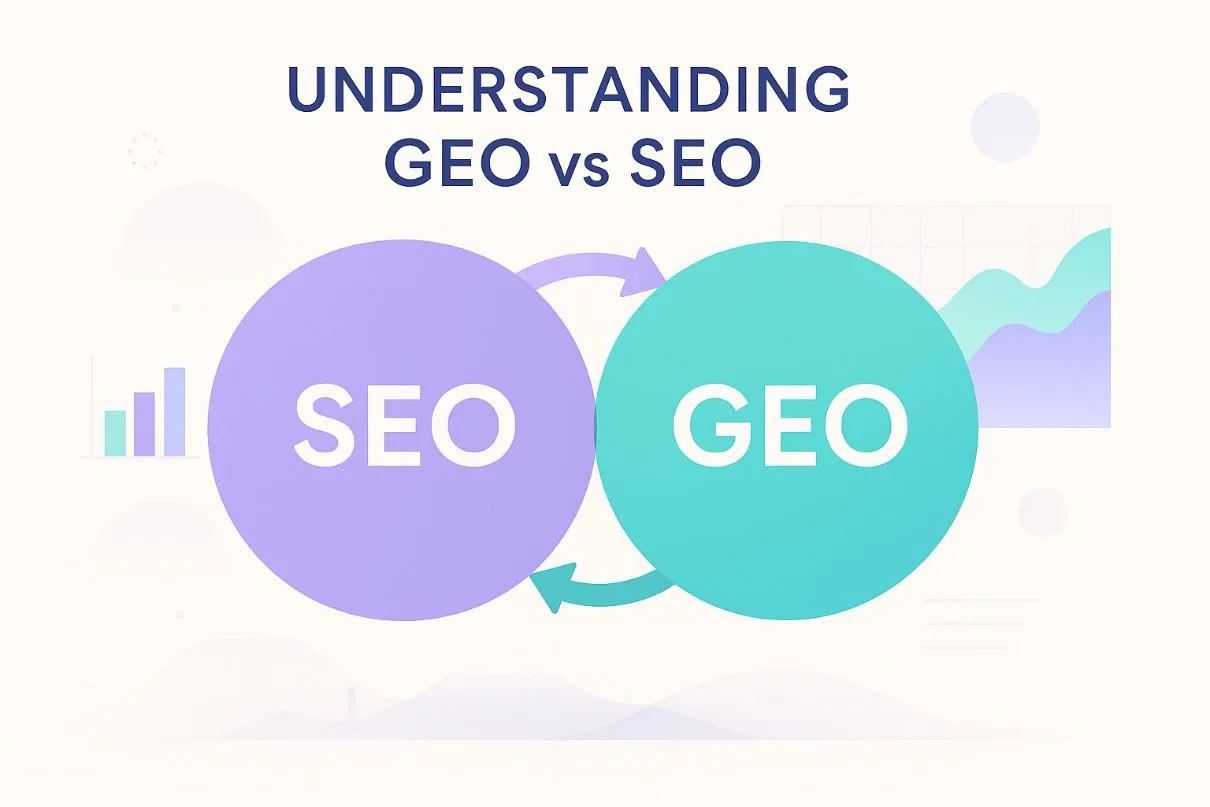
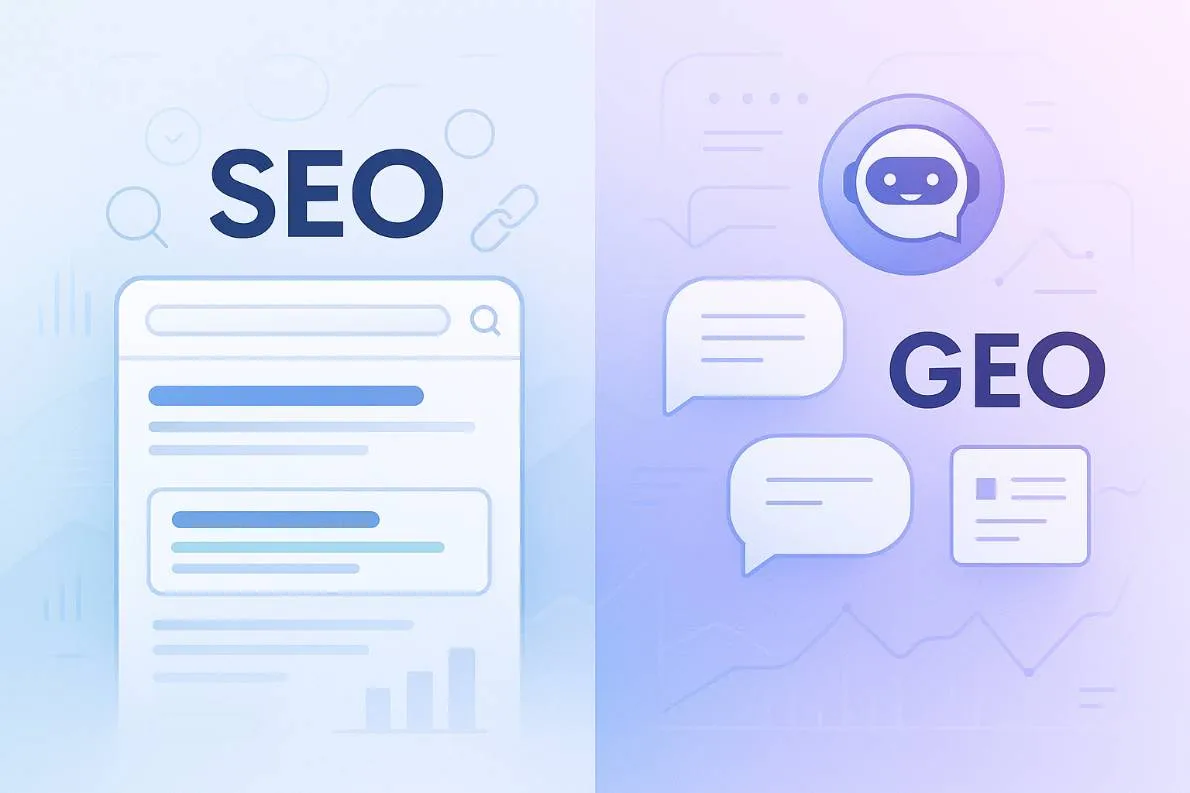
Geo vs SEO is no longer a theoretical debate; it’s a practical decision about how it is essential to achieve visibility across two very different discovery experiences. On one side, SEO aims to rank your pages in organic search engine results pages (SERPs), and drive clicks to your site. On the other, GEO—Generative Engine Optimisation—aims to get your brand included in AI-generated outputs across conversational assistants and answer engines, whether or not a click follows.
The distinction is important because generative AI has reshaped how people seek and consume information. AI-driven engines now deliver answers, summaries, conversational guidance, and citations pulled from across the web. Optimising for those outputs requires a different emphasis than classic SEO. In simple terms:
- GEO focuses on full, conversational questions and on being used by AI models in their responses and citations.
- SEO focuses on keywords and short phrases to earn rankings in traditional SERPs and drive visits to your site.
The Geo vs SEO comparison isn’t about picking a winner. The two are complementary. SEO still relies on high-quality, authoritative content aligned with user intent, while GEO leans into content that AI systems can easily understand, process, and use. Where SEO optimises for ranking factors like keywords and backlinks, GEO places more weight on brand mentions and information relevancy so you appear as an option an AI might present or cite.
Why Geo vs SEO matters now:
- AI-driven engines have fundamentally changed user experience, so it is essential to achieve visibility across both AI responses and traditional listings.
- GEO’s goal is to be included in AI outputs regardless of a click, while SEO’s goal is to earn clicks from organic results. Combining them maximises exposure and traffic.
- You’ll learn how to align content to conversational questions (GEO) and intent-focused keywords (SEO) so you can show up wherever customers look.
By the end of this guide, you’ll understand the core differences in Geo vs SEO, how to balance strategies across both, the following numbered list of tools, and the practical steps to implement GEO without sacrificing SEO.
Top Strategies and Tools in Geo vs SEO
At a strategy level, GEO and SEO share a bedrock: create high-quality, comprehensive, authoritative content that aligns with user intent. The difference lies in how you structure and position that content for each environment.
For GEO:
- Prioritise full, conversational questions and answers to help AI systems recognise and reuse your content.
- Emphasise brand mentions and information relevancy so engines can confidently cite you.
- Ensure your content is clearly understood by generative models—think clarity, completeness, and consistent terminology that reinforces your brand.
For SEO:
- Target keywords and short phrases mapped to intent across the funnel.
- Support content with ranking factors like relevant keywords and backlinks.
- Provide direct answers and concise summaries that satisfy searchers and help you appear in traditional results.
Practical guidance for balancing Geo vs SEO:
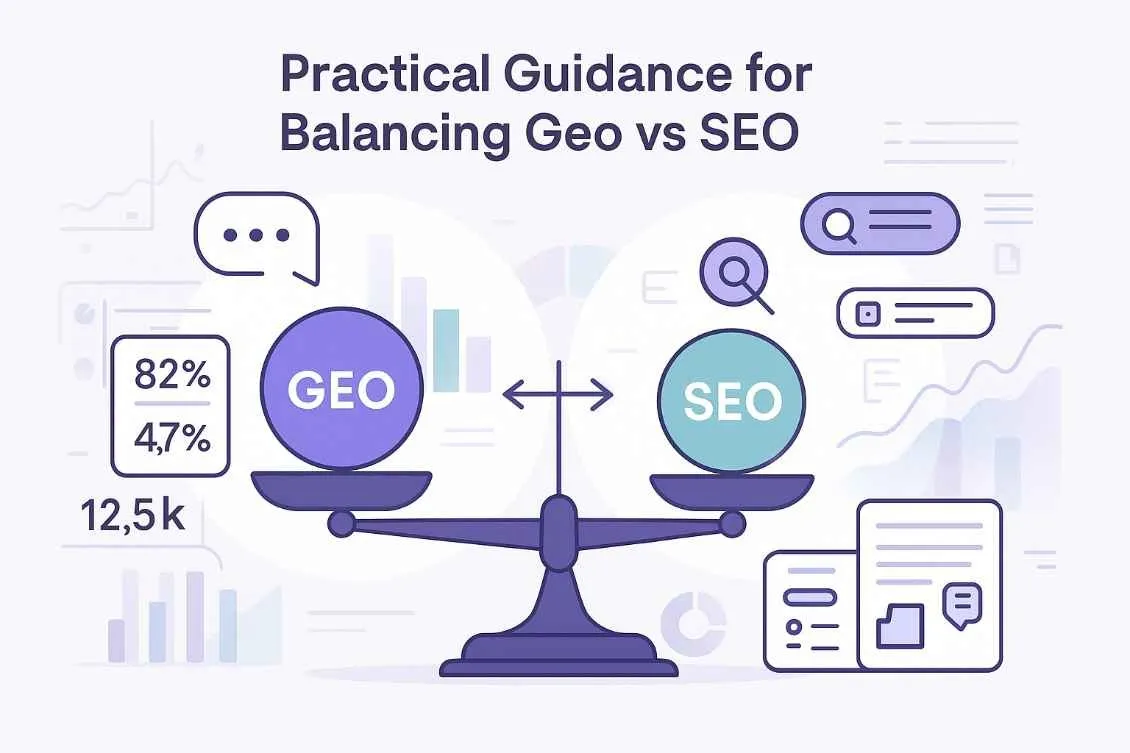
- Adapt your existing SEO content so it’s easier for generative engines to digest and deploy in answers. The core tactics are similar; you’re adjusting emphasis, not reinventing everything.
- Write to the way people now ask questions: structured, complete answers to conversational prompts alongside concise SEO-friendly summaries.
- Keep your analytics and local profiles in order; they still underpin visibility in traditional search scenarios and complement your GEO efforts.
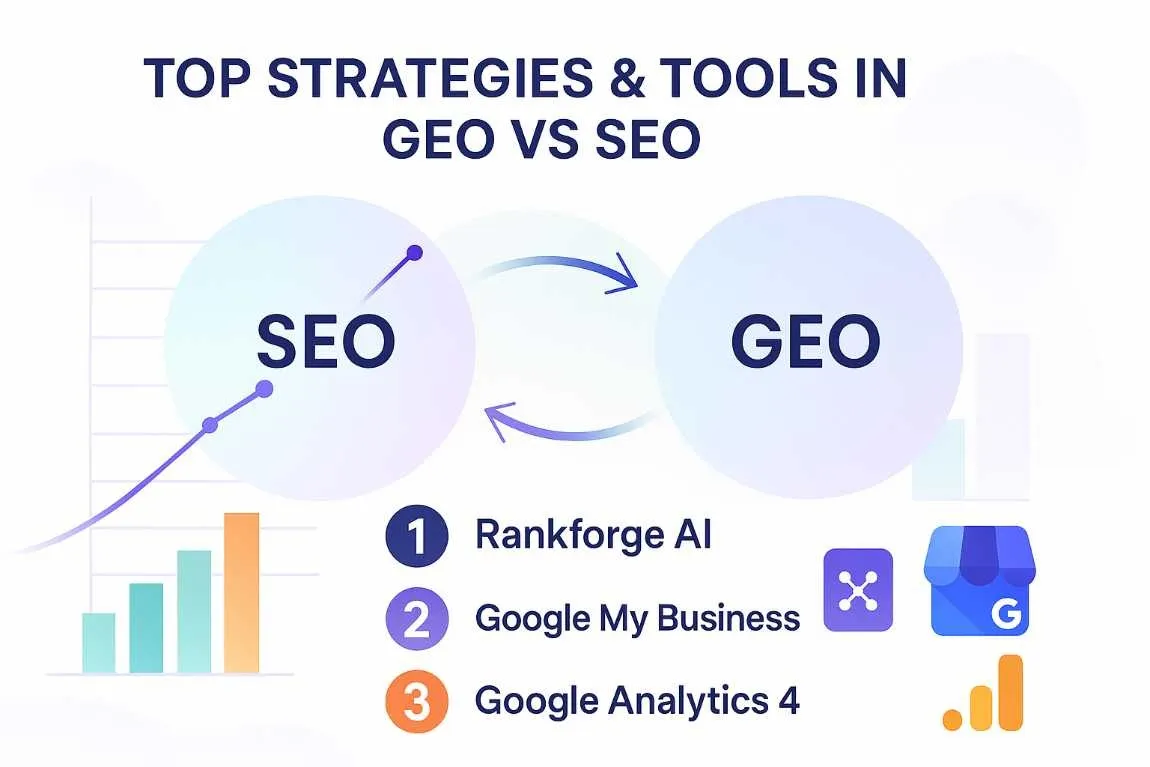
To operationalise this in a safe, scalable way, build your toolset around both visibility paths. The following numbered list references specific tools, as allowed, and shows how they support your Geo vs SEO execution:
1. Rankforge AI
Use your chosen strategy platform to align GEO and SEO workflows: plan content that answers conversational questions while also targeting the keywords that matter in SERPs. Treat both as complementary so you appear in AI outputs and traditional listings simultaneously.
2. Google My Business (GMB)
Maintain and optimise your local profile because it still plays a role in local SEO visibility. Solid local fundamentals support both organic discovery and how AI engines surface local options.
3. Google Analytics 4 (GA4)
Use analytics to understand behaviour and monitor the impact of your content updates. GA4 can support local SEO strategies and help you see how your adjustments for GEO and SEO affect engagement.
Common mistakes to avoid as you execute Geo vs SEO:
- Neglecting conversational content and sticking only to short, keyword-led formats. GEO requires full questions and complete answers.
- Treating SEO tactics as sufficient without adapting for AI outputs. You must ensure your content is understood and utilised by generative models.
- Failing to stay current with how AI engines present answers, summaries, and citations. The landscape is evolving. Your approach should evolve with it.
Key Considerations for Implementing Geo vs SEO Strategies
Selecting the right approach for Geo vs SEO starts with clarity on goals, use-cases, and the signals each environment values.
Selection criteria grounded in current research:
- Define success by channel: GEO targets inclusion in AI outputs (answers, summaries, conversational responses, citations), while SEO targets rankings in traditional SERPs and the clicks that follow.
- Match format to query type: GEO content should mirror natural-language questions; SEO content should map to keywords and short phrases aligned with user intent.
- Align signals to the environment: SEO pursues multiple ranking factors, including keywords and backlinks. GEO emphasises brand mentions and information relevancy so AI can recognise and recommend you.
Practical tips and considerations:
- Optimise for clarity and completeness. When AI models parse your content, they prioritise information that is precise, contextually relevant, and easy to reuse.
- Write to conversational intent. Incorporate full questions and direct, comprehensive answers so your content is ready-made for AI-generated responses.
- Use structured data where appropriate. Enhancing machine understanding helps generative engines and traditional search better interpret your pages.
- Maintain strong fundamentals for SEO. High-quality, authoritative, intent-aligned content remains essential to win in SERPs.
- Monitor trends in generative AI. User behaviour and answer presentation are evolving; keep an eye on how engines summarise, cite, and recommend content.
Geo vs SEO pitfalls to avoid:
- Relying solely on traditional SEO tactics. Without adapting to GEO, you may miss out on AI-driven visibility.
- Overlooking brand mentions and information relevancy. GEO leans heavily on these to surface your brand in AI outputs.
- Ignoring the balance. Focusing on only one side of Geo vs SEO creates gaps—either in SERP clicks or in AI-driven exposure.
Implementation checklist to bridge GEO and SEO:
- Audit existing pages for conversational completeness and clarity; add sections that answer the full questions your customers ask.
- Preserve your keyword targeting and direct-answer summaries to maintain SERP performance.
- Strengthen your brand’s mentions within relevant contexts to improve the likelihood of appearing as a cited source.
- Keep your analytics and local profiles in good shape to support visibility across both traditional and AI-driven discovery.
- Review changes in AI engines’ output formats and update your content structure accordingly.
Navigating the Future of Geo and SEO
Geo vs SEO will define modern visibility because discovery now happens along two intertwined paths. Traditional engines still power intent-led sessions where users click through to sites, and SEO’s ultimate aim remains to align relevant content to that intent and earn those clicks. At the same time, generative engines deliver answers, summaries, and conversational guidance—often with citations. GEO’s aim is to ensure your content is understood, processed, and utilised by those models so you appear in their outputs, regardless of a click.
The core differences remain clear:
- GEO focuses on full, conversational questions and on delivering relevant options for users to explore via AI-generated content.
- SEO focuses on keywords and short phrases and on providing direct answers and summaries that earn rankings and clicks.
- SEO pursues multiple ranking factors such as keywords and backlinks, while GEO prioritises brand mentions and information relevancy to help AI recognise and include you.
Final recommendations to win the Geo vs SEO challenge:
- Treat them as complementary, not competing. You need both to sustain visibility across AI answers and organic listings.
- Adapt existing SEO content for AI engines. The tactics for effective GEO are not dissimilar to SEO; emphasise clarity, completeness, and conversational framing so models can reuse your content.
- Keep learning as generative engines evolve. Their influence on user experience is growing, and optimising for them is increasingly necessary for online visibility and ranking.
Geo vs SEO is a modern marketing dilemma only if you treat it as a choice. The smart move is a blended strategy: protect and grow your SERP presence with strong SEO, while evolving your content so AI-driven engines can confidently surface your brand in answers, summaries, and citations. That’s how you stay visible wherever your customers look next.
FAQs
Q1. What is Geo vs SEO?
Geo vs SEO compares two approaches to visibility: GEO (Generative Engine Optimisation) focuses on being part of AI-generated outputs like answers, summaries, and citations, while SEO aims to rank in traditional organic SERPs and drive clicks. Both align with user intent but emphasise different signals and formats.
Q2. What is Geo vs SEO meaning?
It describes the difference between optimising for AI-driven engines versus traditional search engines. GEO targets inclusion in AI outputs via conversational content and brand mentions, while SEO targets rankings through keywords, backlinks, and direct-answer content.
Q3. How do GEO and SEO differ in goals and tactics?
GEO’s goal is inclusion in AI outputs regardless of a click, so it focuses on full, conversational questions and information relevancy. SEO’s goal is rankings and clicks from organic listings, so it targets keywords and multiple ranking factors, plus concise summaries that satisfy intent.
Q4. How can I implement GEO without sacrificing SEO?
Retain your SEO fundamentals—high-quality, authoritative, intent-aligned content—and adapt pages to answer full conversational questions. Emphasise clarity, completeness, and brand mentions so AI models can understand and cite your content while your SERP performance stays strong.
Q5. Which tools should I use to support both GEO and SEO?
Maintain local and analytics foundations with tools that support local SEO and measurement, and recognise the generative engines where your content can be surfaced in answers and citations. Optimise content so AI-driven engines can process and reuse it while you monitor performance in analytics.
Q6. What common mistakes should I avoid when shifting to GEO?
Avoid relying solely on keyword-led SEO tactics without adapting to conversational queries, and don’t overlook the importance of brand mentions and information relevancy. Keep pace with evolving AI engine behaviours so your content remains visible in both AI outputs and SERPs.
Ready to elevate your content strategy and ensure your articles shine in both search engines and AI-driven platforms? Discover how Rankforge AI can help you create optimised content that attracts visitors effortlessly at rankforgeai.247-workforce.com.