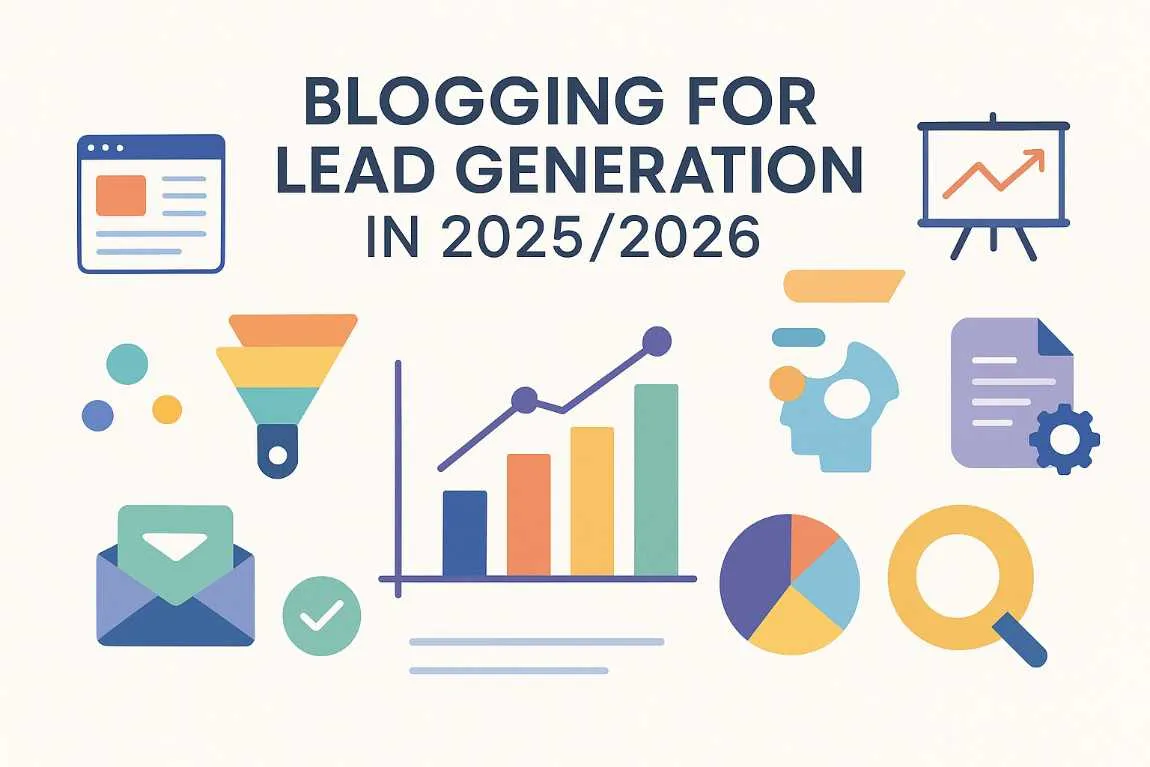
Curious How Blogging for Lead Generation Can Transform Your Revenue Stream in 2025/2026?
Understanding Lead Generation: Foundations and Future Trends
Lead generation defined, without the jargon
Lead generation is the process of collecting new leads using marketing strategies that identify people interested in your products or services. It’s not just list-building for its own sake; it’s the first step in moving potential customers through the buying process—from awareness to interest, consideration, and conversion.
Why a defined strategy matters
A clear lead generation strategy helps you expand reach, target ideal customers, optimise marketing spend, access audience data, and nurture contacts into loyal customers. Blogging for lead generation gives you a cost-effective channel to attract the right people and move them towards action.
Benchmarks and the conversion journey
A good lead-to-visit conversion rate is often around 2% to 5%, but your ideal number depends on your goals, audience, and offer. What matters most is consistent optimisation: identify your target audience, optimise landing pages, create engaging content, choose your promotion channels, and regularly analyse and tweak.
Converting visitors into leads—and leads into sales
Treat every visit as the start of a conversation. Encourage online submission forms, phone calls, and live chat. Blogging for lead generation thrives when your content answers questions and your site offers simple, clear ways to respond.
Trends shaping 2025 and 2026
- Video keeps winning: 96% of marketers say video helps users understand products or services, and viewers spend an average of 17 hours a week watching online videos.
- Mobile is non-negotiable: 90% of consumers watch videos on their phones, so short, vertical, captioned video is essential.
- Personalisation with privacy: Tailor content with AI while respecting data privacy.
- Durable SEO and content: Mobile-first SEO, strong links, accessible experiences, and longer, comprehensive articles continue to drive results.
- Influence matters: Influencer marketing—modern word-of-mouth—remains especially effective for younger audiences.
All of this underscores a simple truth: blogging for lead generation works best when you pair valuable content with frictionless conversion paths and a test-and-learn mindset.
Essential Strategies for Lead Generation in 2025/2026
Here are the priority plays that keep blogging for lead generation effective this year and next:
1. Embrace video marketing
Short, vertical, captioned videos fit how people consume content on mobile. Use video to explain products, show outcomes, and tease deeper resources that require an email to access.
2. Personalise your marketing content
Use AI thoughtfully to tailor messages to audience needs while staying respectful of data privacy. Align topics to pain points, and match offers to a visitor’s stage in the funnel.
3. Don’t forget SEO optimisation
Make your site mobile-first. Earn quality backlinks, keep content accessible, and structure posts around relevant keywords and strong internal linking. SEO is still a cornerstone of blogging for lead generation.
4. Review your content marketing strategy
Longer, comprehensive articles—enhanced by AI for research and structure—still work. Publish pieces that genuinely answer questions and link naturally to supporting resources and offers.
5. Leverage email marketing
Email remains a reliable way to nurture leads into sales. Provide valuable content, set expectations clearly, and build trust over time.
6. Invest in influencer marketing
Word-of-mouth at scale is powerful, especially for Gen Z. Partner with trusted voices to introduce your content and lead magnets to new audiences.
Throughout, adhere to the fundamentals: identify your audience, optimise landing pages, create quality content, select the right promotion channels, and regularly analyse and tweak. A lead-to-visit rate of 2% to 5% is a commonly accepted range for most blogs, but continuously refine your approach based on data.
Optimising Your Blog for Lead Generation: Core Principles
Turn authority into action
An optimised blog increases brand awareness, boosts sales, and converts visitors into customers—without the cost of traditional advertising. It also builds authority and can improve search engine rankings. To make those gains translate into qualified leads, publish diverse, interconnected content that links into clear calls to action.
Search best practices that still move the needle
- Use relevant keywords across titles, headers, and copy.
- Write compelling title tags and meta descriptions.
- Add high-quality images with descriptive alt text.
- Build internal links to connect related posts and guide discovery.
These fundamentals keep blogging for lead generation discoverable and easy to navigate.
Go beyond SEO
SEO brings the click; editorial quality wins the lead. Tell stories, connect emotionally, and share helpful advice that makes your audience feel understood. A great blog template that weaves in lead capture makes it effortless for readers to take the next step.
Map your website flow to the conversion funnel
Design pages that guide people through awareness, interest, trust, and action. Align each post with an offer and a destination—such as a landing page or contact form—that matches the visitor’s intent. Use pop-ups and prompts thoughtfully to support, not interrupt, that journey.
Avoid common blockers
- Publishing without understanding audience pain points.
- Underusing calls to action.
- Neglecting to analyse and refine.
Done right, blogging for lead generation compounds—each month’s improvements drive better performance the next.
Content Marketing Tactics for Effective Lead Generation
Cover the whole funnel
Create content for every stage—awareness, consideration, decision—so you can capture interest early and guide it forward. Early-stage content is often where marketers see the most volume; design your lead magnets and nurture sequences to support that reality.
Build topical authority
Concentrate on a few key topics and go deep. Use pillar pages to give comprehensive coverage, then support them with cluster content that interlinks. This structure signals expertise to search engines and clarity to readers—both critical to blogging for lead generation.
Produce excellent content pieces
Aim for comprehensive, objective, genuinely useful articles that answer real questions. When your content solves pain points, readers are far more willing to exchange contact details for more.
Continuously refine your approach based on data
Revisit your analytics frequently and refine. Video consumption is rising; test video summaries and explainers inside posts. Keep your focus on the next best improvement rather than wholesale overhauls.
Lead Magnets and Conversion Techniques
Offer value worth an email
Create valuable, downloadable resources—guides, checklists, templates—in exchange for contact information. Gated content remains one of the most dependable tactics in blogging for lead generation, and it gives you insights into what your audience cares about.
Add a clear CTA to every post
Tell readers exactly what to do next: download a resource, request a callback, start a live chat, or subscribe for more insights. Calls to action turn interest into momentum.
Use pop-ups and banners with intent
- Pop-ups can surprise and convert when they deliver relevance—a tailored offer, a timely discount, or a content upgrade.
- Exit-intent versions can catch readers as they’re about to leave.
- Banners placed thoughtfully across your blog can nudge engagement without derailing the reading experience.
If you have marketing automation in place, implementing website pop-up forms is typically straightforward.
Know your benchmarks—and your business
For many organisations, visitor-to-lead conversion rates are relatively small; 2% to 5% is a commonly cited range. Ultimately, define a target that aligns with your goals, and keep improving your offers and landing pages over time.
Avoid the usual pitfalls
- Weak value exchange in your lead magnets.
- Failing to follow up.
- Overlooking audience pain points.
The right lead magnet strategy can fuel your funnel and make blogging for lead generation a predictable growth lever.
Essential Blog Post Elements for Lead Capture
Use this on-page checklist to turn more readers into contacts:
1. Keyword-focused H1 header
Use your target keyphrase in the H1 to maximise SEO opportunities. For example, a post like “Blogging for Lead Generation: [Specific Outcome]” sets up both relevance and intent.
2. Featured image that earns attention
An attractive featured image increases on-site engagement and improves social performance when your article is shared.
3. Email signup box that follows the three Ps
Design prominent signup forms that convey a promise (what subscribers get), add proof (why they should trust you), and stand out on the page. Place them where intent is highest.
4. Social sharing buttons
Make it easy to share by placing buttons in multiple locations. Consider whether showing share counts helps or hinders your goals.
5. A human byline
Adding a face to the author line makes your marketing feel personal and trustworthy—especially important when blogging for lead generation relies on building rapport.
Remember: even strong blogs often convert at 2% to 5%. That’s normal. What counts is the steady, incremental lift from continuous improvement.
Tools and Technologies for Lead Generation
Curate a lightweight stack that supports your goals
There’s a broad ecosystem of lead generation software and tools available in 2025, plus focused roundups that break down six must-have tools for turning content into pipeline. Choose tools that make it easier to create, capture, and track—without adding unnecessary complexity.
Track efficiency with cost per lead (CPL)
Understanding CPL helps you compare channels and offers. If you want a quick way to do the maths, Lefeeder’s CPL Calculator simplifies the calculation so you can make faster decisions.
Speed up your reporting
A ready-made Google Analytics 4 traffic dashboard saves time. Using a Databox template is a practical shortcut to visualise the metrics that matter for blogging for lead generation.
Automate wisely
Website pop-up forms are great for generating leads—and simple to implement with the right marketing automation in place. Just keep the experience helpful and the value clear.
Channel Specific Lead Generation Strategies
Play to each platform’s strengths
Facebook, Instagram, LinkedIn, TikTok, and YouTube each offer unique opportunities based on their audiences and content formats. Repurpose posts, clips, and summaries that point back to your lead magnets. Video is critical across the board, especially on mobile, so craft vertically oriented, captioned snippets that preview value.
Lean into email for nurturing and conversion
Email doesn’t just generate leads; it nurtures them. Use it to deliver value, build trust, and spur action. In the context of blogging for lead generation, your newsletter can become the bridge between a first visit and a sales conversation.
Support B2B decision journeys
B2B lead generation often demands more trust and longer cycles. Use compelling lead magnets, run lead generation ads to collect data efficiently, and focus your blog on the pain points and outcomes your buyers care about. There are proven ways to capture high-quality leads from company visits—popups, exit-intent, and targeted offers are part of that mix.
Convert readers into contacts
Your blog should meet readers where they are, address their pain points, and encourage them to share their information. Exit-intent popups, contextual CTAs, and value-packed banners can tip the balance.
Avoid channel missteps
- Skipping audience research.
- Failing to optimise landing pages.
- Neglecting to analyse and refine regularly.
Keep testing formats and offers, and remember: blogging for lead generation improves when your content, conversion paths, and channels all work in concert.
Ready to transform your blog into a lead generation powerhouse? Discover how Rankforge AI can help you create optimised articles that not only attract visitors but also convert them into leads—visit us at rankforgeai.247-workforce.com to get started!
FAQ
Q1. Do blogs generate leads?
Yes. A well-optimised blog increases authority, improves search visibility, and, with clear CTAs, pop-ups, and gated content, converts visitors into contacts you can nurture into customers.
Q2. Is blogging still good for SEO?
Absolutely. Relevant keywords, compelling meta descriptions and title tags, high-quality images, and strong internal linking help posts rank—and that visibility fuels blogging for lead generation.
Q3. What’s a good lead-to-visit conversion rate for a blog?
Many teams see 2% to 5% as a healthy range, though the right target depends on your goals and offers. Keep analysing and tweaking to find what works best for your audience.
Q4. Which lead magnets work best for blog readers?
Valuable, downloadable resources—like guides, checklists, or templates—perform well when matched to audience pain points. Gated content offers both leads and insights into what readers want.
Q5. How should I set up blog posts to capture more leads?
Use a keyword-focused H1, an eye-catching featured image, prominent email signups with the three Ps (prominence, promise, proof), social sharing buttons, and a clear CTA. Pop-ups and banners can add timely prompts.
Q6. How do I calculate cost per lead (CPL) from my blog?
Track your total spend against the number of leads generated to find CPL. If you want a simple way to run the numbers, Lefeeder’s CPL Calculator streamlines the calculation so you can assess the efficiency of blogging for lead generation.